
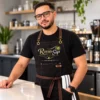

Moroccan pastilla is the reason I still find my job interesting after four years. I work at Le Pain Bul, a bakery on Avenue Amir Moulay Abdellah in Rabat, and honestly, when people ask me what it’s like, I never know where to start. So I’ll start with the pastilla.
I don’t make it myself — we have a specialized team for that, and watching them work is honestly half the reason I still find this job interesting after four years. From the paper-thin warqa dough to that last dusting of cinnamon and sugar, there’s a rhythm to it. Almost ceremonial. Every pastilla that leaves our kitchen is carrying something like a century of practice behind it, even if the customer buying it just wants breakfast.
What Is Moroccan Pastilla, Actually?
Okay, basics first. Pastilla — you’ll also see it spelled bastilla or b’stilla, depending on who’s writing it — is this savory-sweet pie wrapped in layers of warqa dough. Think filo, but a bit thicker and sturdier. It’s traditionally served at the start of a meal, usually for something worth celebrating: weddings, big family gatherings, that kind of thing.
Making the dough alone is its own skill. From what I understand, warqa is made by dabbing wet batter onto a hot griddle in a circle, letting it cook for just a few seconds until it goes translucent, then stacking the sheets. It holds up better than regular filo, which matters a lot once it’s wrapped around a filling and baked.
What gets people about pastilla the first time is the contrast. Crisp pastry. Soft, spiced filling. Then sugar and cinnamon on top, which sounds like it shouldn’t work with savory chicken and almonds, but it does. I remember the first time I actually tasted a proper one — I wasn’t ready for it. Four years later, watching people have that same reaction, it still hasn’t gotten old for me.
Nobody fully agrees on where pastilla actually came from, by the way. Some food historians point to 10th-century Al-Andalus, carried over by Muslims expelled from Spain. Others think it came later, through Ottoman Algeria. I’m not going to pretend I know which version is right. Either way, it’s old, and it’s stayed a Moroccan celebration dish for a very long time.
The Two Pastillas We Make at Le Pain Bul
We do two versions at the bakery. Both are good. I have a slight preference, but I’ll let you decide for yourself.
Chicken and Almond Pastilla

This is the one everyone thinks of first when they hear “pastilla.” Slow-cooked chicken, chopped almonds, and a spice mix — saffron, cinnamon, ginger, a bit of pepper — all wrapped in warqa and baked until it’s golden and flaky. Then comes the powdered sugar and a lattice pattern of cinnamon on top.
It’s the classic for a reason. The almonds give it crunch against the soft chicken, the spices are warm without taking over, and honestly, if someone’s never had pastilla before, this is what I’d point them toward. I’ve watched enough first-timers take that first bite over the past four years to know it almost always works.
Seafood Pastilla

This one’s different. Instead of chicken, it’s made with Chinese vermicelli, seafood, and white fish, cooked more gently with herbs and less spice.
Here’s the important part: cinnamon and sugar never go on this one. Not even a light dusting. That sweet topping is reserved entirely for the chicken and almond version — the seafood pastilla stays fully savory from start to finish. Wikipedia actually backs this up too, noting that traditional seafood pastilla skips the sweet finish that poultry pastilla gets. So this isn’t Le Pain Bul doing something unusual — it’s actually the more traditional way to do it.
It’s lighter than the chicken pastilla, a little briny, closer to something you’d want on a warm day. Makes sense, given we’re not far from the coast.
About the Bakery Itself
Le Pain Bul has been around since 1928. That’s not a made-up number for the sake of a good story — it’s genuinely printed on their signage and social media, though I’ll admit the official business registry lists a slightly different year, 1935. I’m not sure why the gap exists. Maybe a re-registration at some point. I’ve never asked.
Either way, walking in still feels a little like stepping back in time. Croissants, chebakia dripping in honey, and always, at the center of the display, the pastilla.
Four years in, what I’ve picked up from just being around this every day is that pastilla isn’t really about following steps. It’s about knowing the dough — when it’s thin enough, when it’s ready, when the sweet and savory balance is actually right instead of just close. I don’t do that part myself, but I’ve watched it enough times to at least understand what I’m looking at.
Why This Still Matters to Me
Pastilla isn’t just a wedding dish anymore, even if that’s where it started. More people are looking for food that actually means something, not just food that’s convenient. And pastilla, in a weird way, tells a whole story in one bite — coastal versus inland, old versus adapted, Andalusian roots wrapped in a very Moroccan present.
I think that’s honestly why I haven’t gotten tired of it after four years. It’s not just the taste. It’s what Moroccan pastilla represents every time someone takes a bite of something that’s been made almost the same way for a century.
Read also: Pastilla-Inspired Chicken Croissant Sandwich — my own attempt at putting these flavors into something handheld, still untested as of writing this.
Read also: 18 Amazing Foods: What Do Moroccans Eat for Breakfast?
If You’re Ever in Rabat
Come by Le Pain Bul, on Avenue Amir Moulay Abdellah. Get the chicken and almond pastilla if it’s your first time. Try the seafood one if you’re feeling a little adventurous. Either way, don’t rush it — take a minute with it before you eat.
You might even see me behind the counter. I’ve been there four years, and I’m not planning on going anywhere.
Le Pain Bul Avenue Amir Moulay Abdellah, Rabat, Morocco Instagram
A Few Questions People Ask Me
What is Moroccan pastilla exactly? A savory-sweet pie made with thin warqa dough, filled with spiced meat or seafood, then dusted with sugar and cinnamon on top. The classic chicken version also includes almonds. Usually saved for celebrations.
What’s the difference between your two pastillas? Chicken and almond gets the traditional sweet finish — cinnamon and powdered sugar on top. Seafood is made with Chinese vermicelli, seafood, and white fish, and never gets any cinnamon or sugar — it stays fully savory.
Is it sweet or savory? Depends which one. Chicken and almond is genuinely both — that contrast is the whole point. Seafood is fully savory, no sweetness at all.
Where’s the bakery? Avenue Amir Moulay Abdellah, Rabat. Been there since 1928, or 1935 depending on which record you trust.
Which one should I try first? Chicken and almond, if it’s your first pastilla. It’s the one that gives you the full picture.
Discover more from Rayan Sip
Subscribe to get the latest posts sent to your email.


